Launching Your Reusable Container Program:
The First 30 Days


Launching a reusable container program is an exciting milestone in your sustainability initiatives, but the first month is about more than simply replacing single-use packaging. It’s an opportunity to introduce new habits, gather feedback, and build a culture of reuse across campus.
While every campus is different, most successful programs follow a similar pattern. Here’s what you can expect during your first 30 days and how to set your program up for long-term success.
Before Day One: Set Yourself Up for Success
A successful launch starts well before the first container is borrowed.
Take time to ensure dining staff understand the borrowing and return process, collection bins are placed in convenient, high-traffic locations, and students know what to expect before they arrive on campus. Whether you’re promoting the program through orientation, social media, email, or signage, early communication helps reduce confusion and encourages participation from day one.
It’s also helpful to define what success looks like. Will you measure borrow and return rates? Student participation? Disposable containers avoided? Establishing your goals early makes it easier to evaluate your progress throughout the semester.
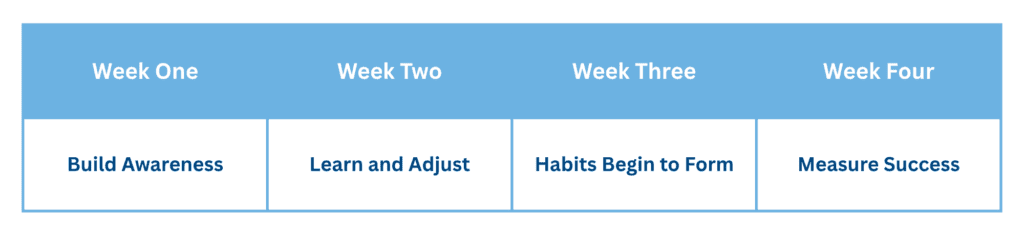
Week One: Build Awareness
The first week is all about introducing students to the program and encouraging them to give it a try.
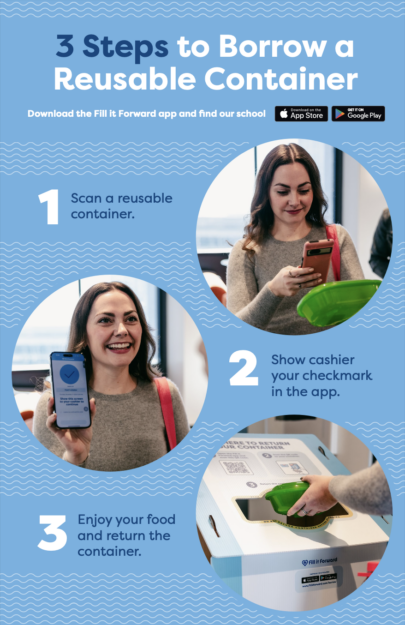
Expect questions as students learn how borrowing and returning containers works. Clear signage, friendly reminders from dining staff, and simple instructions can make the experience feel effortless.
Remember, not every student needs to participate immediately. Every first borrowed container is the beginning of a new habit.
Week Two: Learn and Adjust
By the second week, you’ll have valuable insights into how your reusable container program is performing.
Pay attention to return rates, collection bin usage, and any questions or challenges students and staff are experiencing. You may discover that certain collection bins should be relocated, additional signage is needed, or a small process change could improve the overall experience.
These adjustments are a normal part of launching any new initiative and often lead to stronger participation over time.

Week Three: Habits Begin to Form
As students become more familiar with the program, borrowing a reusable container starts to feel like part of their regular routine.
You’ll likely notice more repeat borrowers, fewer questions about the process, and smoother day-to-day participation across campus. As confidence grows, reliance on disposable packaging naturally begins to decline.
This is when a reusable container program starts becoming part of campus culture rather than simply a new initiative. At Montclair State University, students, faculty, and dining staff embraced reuse together, helping make sustainable choices part of everyday campus life.

Week Four: Measure Your Early Success
After one month, it’s time to celebrate your progress and review your results.
Consider metrics such as return rates, student participation, and operational efficiencies. These early indicators can help identify what’s working well while highlighting opportunities for continued improvement.
Remember that the first month is just the beginning. Across Fill it Forward’s Borrow programs, campuses achieve an average 98% container return rate after one semester, demonstrating how quickly consistent habits can take hold when students, dining teams, and campus leaders work together.
Sharing these milestones with students and staff reinforces the collective impact of choosing reuse and helps maintain momentum moving forward.

The First Month Is Just the Beginning
The first 30 days lay the foundation for a successful reusable container program, but they’re only the beginning.
The campuses that see the greatest long-term impact aren’t necessarily the ones with perfect launches. They’re the ones that continue listening, adapting, and engaging their communities. By building awareness, responding to feedback, and celebrating early successes, you’ll create habits that extend far beyond the first month.
If you’re preparing to launch your own reusable container program, our How to Launch a Reusable Container Program Checklist is a helpful resource. It walks through the key steps to take before launch, ensuring your team is ready to build a smooth, successful program from day one.
Every container borrowed, every disposable item avoided, and every student who chooses reuse helps move your campus toward a more sustainable future. And it all starts with those first 30 days.